
Durham Academy is taking its biggest step yet to fulfill the goal of reducing carbon emissions from daily operations by putting solar panels on its two largest buildings. Let’s geek out about the details!
This single action of installing solar panels will reduce our
annual carbon footprint by 7%.
On the Gateway building, Southern Energy Management will install 221 panels that will generate 130 kW-DC. On the STEM and Humanities building, 241 panels will generate 142 kW-DC. Inverters at each site will convert DC current to AC for a total of 366,308 kWh of electricity in their first year. That’s 10% of the school’s total use! The amount will decline slightly over the 30+ year life of the panels (about .5% per year) but is guaranteed not to dip below 293,000 kWh.
When is this happening?
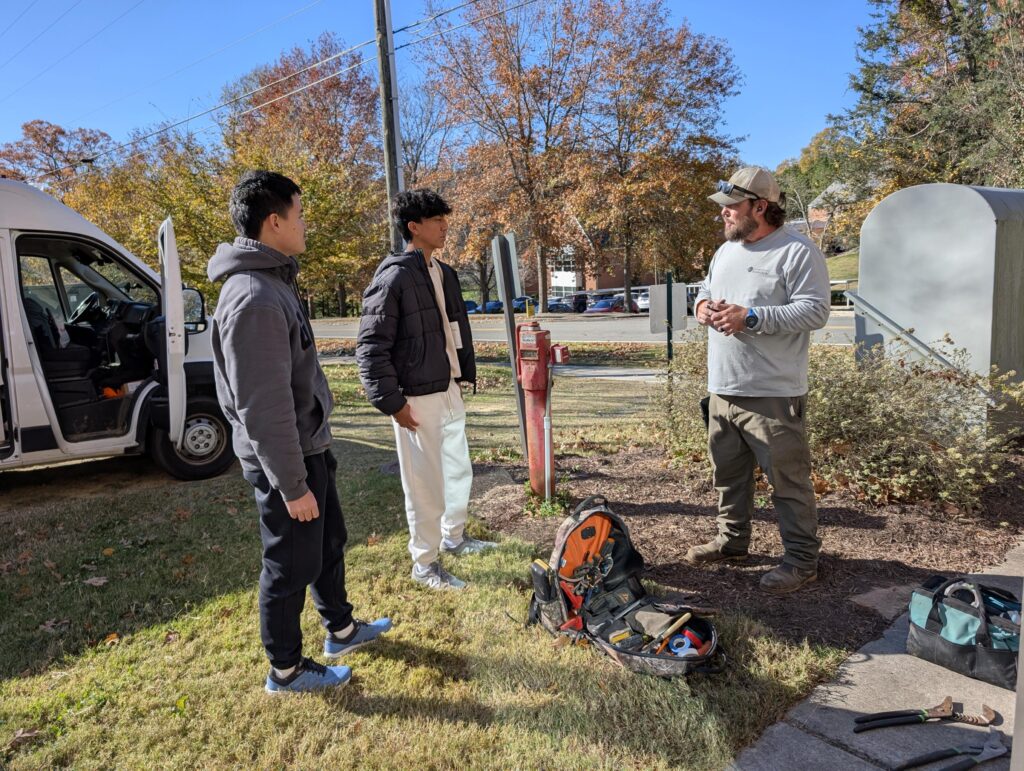
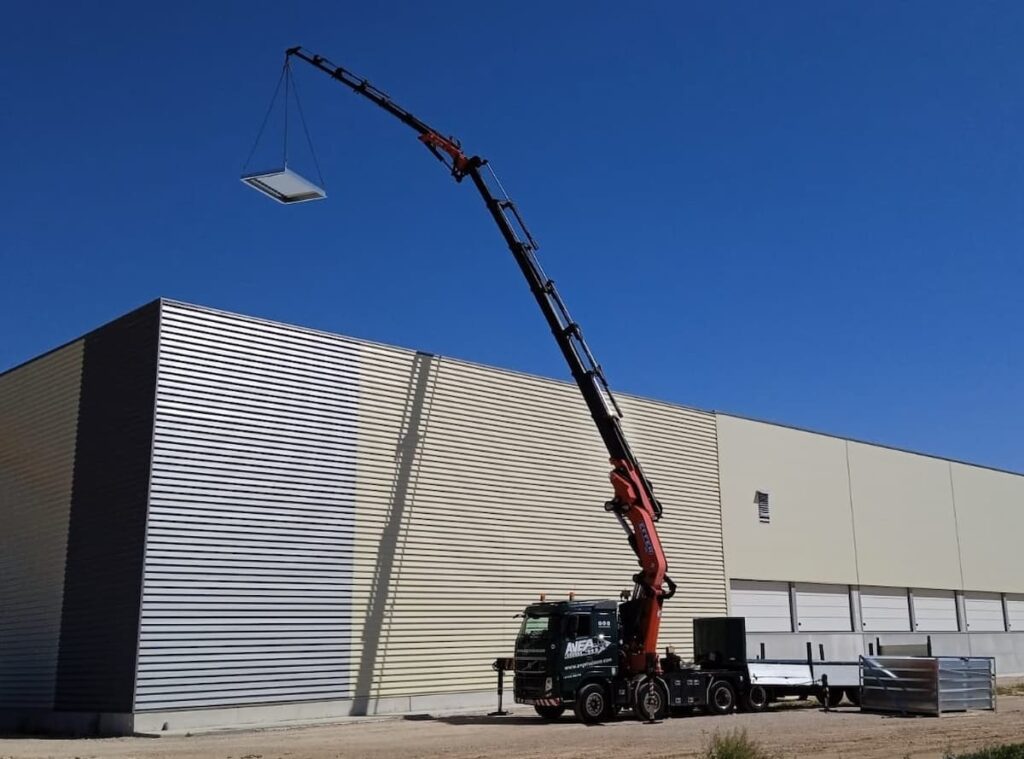
Maybe you heard the sweet sound of drilling back in November, when the electrician installed wiring and conduit in and around the Gateway and STEM electrical closets. Next you’ll see a huge crane beside the buildings
that will lift up the solar panels and deposit them on the rooftops. And after that, there will be six weeks of thumping and bumping on the roofs as racks are built and panels placed into them. Sometime in late February or early March, we should get permission from Duke Energy to connect our system to the grid and start generating electricity!
Carpools for Crane Week
The crane will be in place Jan 6-9 at the Middle School and Jan 13-16 at the Upper School. It will block about 10 parking places and slow the flow of traffic in some spots. Carpooling is the key to avoiding congestion on and around campuses those weeks. Please see the Carpool Information page in Veracross to find out about the Carpool.School app and the “Households Near Me” button to organize carpools that week. If you can keep them going the rest of the year, that would be a great support for sustainability at DA!

Emissions impact
When DA produces 366,308 kWh from the sun, we’ll save approximately 504,589 lbs of carbon emissions (that’s 229 mT of CO2e) that would have been discharged into the air by power plants in the process of meeting our energy needs. All that pollution would then stay in the air for hundreds of years. Over the life span of the panels, the school’s emissions will be lowered by 7,773 mT–greater than two years of operations at current levels! Another way to think about it is that this single action of installing solar panels will reduce our annual carbon footprint by 7%.
Cost Investment
The total cost of these arrays is $536,900. Under the Inflation Reduction Act*, the federal government will reimburse the school for 30% of that amount, making the net cost 375,830. Because the arrays will result in reduced electricity costs, this project is really an investment. The payback period depends on the future cost of electricity, but it’s projected to be 12-14 years. Savings over 30 years are estimated to be greater than $1,200,000.
Where the energy goes
The energy generated by the panels will go straight into the building. When our demand exceeds this supply, we’ll draw additional power from Duke Energy as we do everywhere else at school. When supply exceeds demand, the meter will reverse and we’ll sell electricity back to the utility.
Battery storage?
We’re not using it. Batteries would enable us to keep all the power the panels generate, but they would have to be very large to accommodate all circumstances of power use and generation, and they would entail responsibility for power management that DA is not yet prepared to meet.
What about other buildings?
It’s most cost effective to put solar panels on buildings that have a long life ahead of them, and especially a long life for the roof. The Middle School AWL building is a good candidate. Sadly, the Pre-/Lower School building is not: its roof is in the middle of its life and lacks the long, uninterrupted expanse that’s needed for a solar array. Kirby Gym has a relatively new roof and an excellent, south facing expanse, but the roof supports are too far apart to hold additional weight. Future buildings at Durham Academy will likely be planned to support solar panels.
Your turn!
What does all this information make you think or wonder? Let us know in a comment below.
*Though many parts of the Inflation Reduction Act have been repealed, the provisions that we’ll be using remain valid for projects that start before July 4, 2026 and are completed by the end of 2027.
